
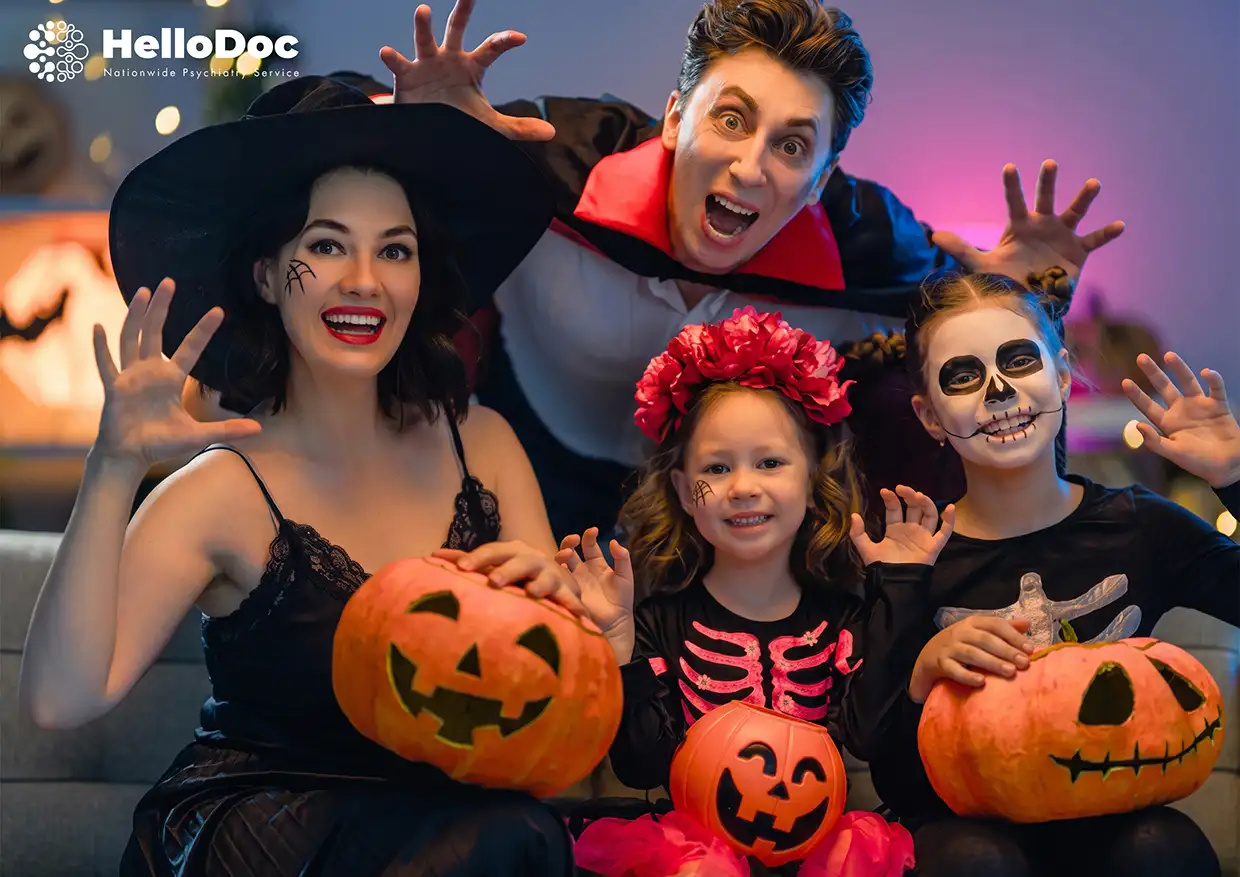
Every October, the same costumes come back. A straitjacket splashed with fake blood. A hospital gown stamped “escaped patient”. A party invitation promising a night at the “haunted asylum”. Most people who wear these costumes or plan these parties aren’t trying to hurt anyone. They want a laugh or a good scare, and the costume shop made it easy.
But more than 2 in 5 Australians aged 16–85 will experience a mental illness at some point in their lives. For them, these costumes repeat an old and damaging idea: that mental illness, and conditions like psychosis, are something to fear or mock. That idea sits at the heart of mental health stigma, and its effects last long after the decorations come down.
The timing makes it sharper. October is Mental Health Month in several Australian states, so Halloween arrives at the end of a month spent encouraging people to speak openly about their mental health. To see why these costumes work against that message, it helps to start with what stigma actually is.

Key takeaways
- Mental health stigma is the negative beliefs, stereotypes and attitudes people hold about mental illness.
- “Mental patient” and “psycho” costumes link mental illness with danger, which reinforces stigma.
- Psychosis is a symptom where a person loses touch with reality. It is not the same as being a “psychopath”.
- People with serious mental illness are more likely to be victims of violence than perpetrators.
- Stigma is one of the main reasons people delay seeking help, and small everyday choices can reduce it.
What Is Mental Health Stigma?
Mental health stigma is the negative beliefs, stereotypes and attitudes people hold about mental illness. Those beliefs can lead to shame, unfair treatment and people avoiding help when they need it most.
Stigma usually shows up in three forms:
- Public stigma: the attitudes held by the wider community, such as believing people with mental illness are weak, unpredictable or dangerous.
- Self-stigma: when people living with mental illness come to believe those attitudes about themselves.
- Structural stigma: when systems, workplaces or institutions treat people with mental illness unfairly, whether intentionally or not.
You’ve probably seen examples of mental health stigma without labelling it. A colleague calls a demanding client “a total psycho”. A news story mentions a person’s diagnosis when it has nothing to do with the event. Someone assumes a friend with bipolar disorder can’t handle responsibility. Each moment is small, but together they shape how people living with mental illness are seen, and how they see themselves.
Of the three types, self-stigma is often the hardest to notice, because it happens quietly inside a person’s own mind.
What Is Self-Stigma?
Self-stigma happens when a person living with mental illness absorbs the stereotypes around them and turns them inward. They might think, “I’m weak for needing help,” or “People will think I’m dangerous if they find out.” Over time, this can lower self-worth, increase isolation and make someone hide their symptoms instead of talking about them.
Those stereotypes have to come from somewhere. Many are learned through images we see again and again, and few images are repeated as loudly as the ones hanging on Halloween costume racks.
Why ‘Mental Patient’ and Asylum Costumes Cause Harm
So-called “mental patient” costumes usually follow the same script: a straitjacket or hospital gown, wild hair, fake blood, and sometimes a weapon. Search for an asylum costume or a psycho costume and you’ll find endless versions of the same character, and the “asylum Halloween” party theme builds an entire night around it. A single costume is a small thing. The message it carries is not, and it causes harm in four connected ways.
They Link Mental Illness With Violence
The “escaped patient” is almost always shown as violent and out of control. That image reinforces one of the most persistent myths about mental illness and violence: that people who live with mental illness are a threat to others. As you’ll see later in this article, the evidence points strongly in the opposite direction.
They Turn Real Conditions Into a Costume
Vampires and werewolves are fantasy. Mental illness is a real health condition that affects millions of Australians and their families. Dressing up as a “mental patient” turns someone’s lived experience, sometimes the hardest period of their life, into a joke or a scare.
They Echo a Painful History
Straitjackets, locked wards and restraints aren’t invented props. They were part of how people with mental illness were treated for generations, often against their will. For families who remember relatives being sent away, these costumes can bring that history uncomfortably close.
They Make It Harder to Ask for Help
When mental illness is shown as frightening or shameful, people who are struggling get the message that their symptoms are something to hide. That silence matters, because the longer someone waits to seek help, the harder recovery can become.
Of course, not everyone sees it this way, and that view deserves a fair hearing.
Offensive Halloween Costumes or Just a Bit of Fun?
Whether these are offensive Halloween costumes or just harmless fun is a reasonable question. Halloween is built on fear and fantasy. People dress up as serial killers, demons and zombies every year, and most of the time nobody is hurt. Some people feel that criticising certain costumes takes the fun out of the night, or that it’s an overreaction to something meant as a joke.
The difference lies in who the costume represents. Zombies and witches aren’t real groups of people facing discrimination. People living with mental illness are real, and they already face the very stereotypes these costumes show: being seen as violent, unpredictable or less than human. The costume doesn’t create those stereotypes, but it does repeat them, and repetition is how stereotypes survive.
This isn’t a new conversation, either. In 2013, two major UK supermarkets withdrew “mental patient” and “psycho ward” costumes after strong criticism from mental health charities and the public, and both apologised. Nobody is suggesting Halloween should be policed. It’s simply a reminder that what we wear is a choice, and that choice is easy to make differently once you know the impact.
Part of the problem is the word “psycho” itself, which most people use without knowing what it actually means.
What Does “Psycho” Actually Mean?
“Psycho” is slang that blurs two very different things: psychosis, which is a symptom where a person loses touch with reality, and psychopathy, which is a personality pattern marked by a lack of empathy. The two have almost nothing in common, yet the classic Halloween “psycho” merges them into one violent figure.
Psychosis vs Psychopath
The easiest way to see the difference between psychosis and being a psychopath is side by side:
Psychosis | Psychopathy | |
|---|---|---|
What it is | A symptom: losing some contact with reality | A personality pattern |
Main features | Hallucinations, delusions, confused thinking | Lack of empathy, manipulation, antisocial behaviour |
Linked to | Schizophrenia, bipolar disorder, severe depression, substance use and more | Antisocial personality disorder |
How people experience it | Often frightening and distressing for the person | The person may feel little distress |
Treatable? | Yes, often very effectively | Treatment is more complex |
Someone experiencing psychosis is far more likely to be frightened, confused or withdrawn than dangerous. The violent “psycho” of horror films is a fictional mash-up, not a picture of a real illness.
Psychopath vs Sociopath: What’s the Difference?
“Psychopath” and “sociopath” are informal terms, not formal diagnoses. Both are commonly linked to antisocial personality disorder, a condition involving a long-term pattern of disregarding other people’s rights and feelings.
When people do separate the two, psychopathy is usually described as more ingrained, with a deeper lack of empathy, while sociopathy is described as more shaped by environment and upbringing. Experts don’t fully agree on these definitions, and the terms are used inconsistently even among professionals.
What matters most for this conversation is simpler: neither term has anything to do with psychosis. Psychosis is the experience most often confused with the “psycho” stereotype, and it deserves to be understood properly.
What Is Psychosis?
Psychosis is a mental health condition in which a person loses some contact with reality. It can involve seeing or hearing things other people don’t, or holding strong beliefs that aren’t based in reality. Psychosis is more common than many people realise. Around 3 in 100 people will experience it at some point in their lives.
Psychosis is a symptom rather than a single illness. It can be linked to:
- Schizophrenia
- Bipolar disorder
- Severe depression
- Drug or alcohol use, or withdrawal
- Some medical conditions
- Extreme stress or severe lack of sleep
It most often appears for the first time in the late teens or early twenties. Australia has dedicated early psychosis services, including programs developed by Orygen and delivered through headspace, because research shows that getting help early leads to better long-term outcomes. Psychosis is treatable, and many people recover fully or learn to manage their symptoms well.
Getting help early depends on recognising the signs, so it helps to know what psychosis can look like.
Psychosis Symptoms
Psychosis symptoms can develop gradually or appear suddenly. The main ones include:
- Hallucinations: seeing, hearing, smelling or feeling things that aren’t there, most commonly hearing voices
- Delusions: strong beliefs that aren’t based in reality, such as believing you’re being watched or followed
- Confused or disorganised thinking: thoughts that jump around, or speech that’s hard to follow
- Changes in behaviour: pulling away from friends and family, or acting in ways that seem out of character
- Suspiciousness: feeling that others can’t be trusted
Before a first episode, there are often quieter early warning signs, such as changes in sleep, falling concentration, low motivation or feeling that something isn’t quite right. Friends and family often notice these changes first.
For some people, psychosis is a single episode that doesn’t return. For others, it forms part of a longer-term condition, and the one most often misunderstood is schizophrenia.
What Is Schizophrenia?
Schizophrenia is a mental illness that affects how a person thinks, feels and perceives reality, often involving episodes of psychosis. According to the World Health Organization, it affects around 1 in 300 people worldwide. It usually begins between the late teens and early thirties.
Schizophrenia is a long-term condition, but it is treatable. Most people do best with a combination of medication, psychological therapy and practical support with work, study, housing and relationships. With the right care, many people with schizophrenia live full, independent and meaningful lives. Only a psychiatrist can diagnose schizophrenia, usually after a careful assessment over time.
Part of that assessment involves looking at a recognisable set of symptoms.
Schizophrenia Symptoms
Schizophrenia symptoms fall into three groups: positive symptoms such as hallucinations, negative symptoms such as low motivation, and cognitive symptoms such as trouble concentrating.
Positive symptoms (experiences added to a person’s usual thinking):
- Hallucinations, especially hearing voices
- Delusions
- Disorganised thinking and speech
Negative symptoms (abilities or feelings that are reduced):
- Low motivation and difficulty starting tasks
- Reduced emotional expression
- Withdrawing from social contact
Cognitive symptoms (changes in thinking skills):
- Trouble with memory and attention
- Difficulty planning and making decisions
Negative and cognitive symptoms are often less visible than hallucinations or delusions, but they can affect daily life just as much. They’re also the symptoms least likely to appear in movies, which helps explain why the public picture of schizophrenia is so distorted.
Despite how well these symptoms are understood, two myths about schizophrenia remain stubbornly common.
Schizophrenia Myths: Split Personality and Danger
The first myth is that schizophrenia means having a “split personality”. The confusion comes from the name, which was coined from Greek words meaning “split mind”. The psychiatrist who named it was describing a split between thinking, emotion and behaviour, not multiple personalities. Having distinct identities is a separate and much rarer condition called dissociative identity disorder.
The second myth is that people with schizophrenia are dangerous. Research consistently shows that people with serious mental illness are far more likely to be victims of violence than to commit it. Most people with schizophrenia are never violent. Where risk does exist, it is usually linked to factors such as untreated symptoms or substance use, and good treatment reduces it.
These two myths are only the start. Many others still shape how people living with mental illness are treated.
Mental Illness Myths vs Facts
Separating mental health myths and facts is one of the simplest ways to reduce stigma. Here are some of the most common mental illness myths, and what the evidence actually shows:
Myth | Fact |
|---|---|
People with mental illness are violent | People with serious mental illness are more likely to be victims of violence than perpetrators |
Schizophrenia is a split personality | Schizophrenia affects thinking and perception; it is not multiple personalities |
“Psycho” means dangerous | Psychosis is a symptom; psychopathy is something different entirely |
Mental illness is rare | More than 2 in 5 Australians aged 16–85 experience a mental illness in their lifetime |
People with mental illness can’t recover | Many people recover or manage their symptoms well with treatment and support |
People with borderline personality disorder are manipulative | BPD involves intense emotional pain and is very treatable |
That last myth shows how borderline personality disorder stigma can be especially harsh, often discouraging people from seeking care that genuinely works.
Many of these myths trace back to a time when people with mental illness were kept out of public view, behind the walls of the institutions Halloween now borrows its imagery from.
The Real History of Asylums
The history of asylums is a real and often painful part of mental health care, not a horror story. During the 1800s, every Australian colony built large institutions to house people with mental illness, alongside people with intellectual disability, dementia and others society didn’t know how to support.
Life inside was often harsh. Many asylums became overcrowded. People could be admitted for long periods, sometimes for life, with little effective treatment. Restraint, isolation and loss of basic freedoms were common. Some staff worked hard to provide decent care, but the system itself was built around keeping people separate from the community rather than helping them recover.
From the mid-20th century, new treatments and changing attitudes led to deinstitutionalisation: the gradual closure of large asylums and the move towards community-based mental health care. The transition was far from perfect, but it reflected a growing understanding that people with mental illness belong in their communities.
The people who lived in these places were real. They were parents, siblings and children, and many Australian families still carry their stories.
Haunted Asylums and Asylum Ghost Tours
Some former asylum sites now run ghost tours and “haunted asylum” experiences, especially around Halloween. Not all of them are the same. Historical tours that tell the real stories of the people who lived there, with care and respect, can help visitors understand an important part of the past. Attractions that present former patients as monsters or ghouls repeat the same stereotypes as the costumes.
Looking at this history with respect matters because its effects aren’t confined to the past. The stigma it helped build still shapes whether people seek help today.
How Mental Health Stigma Stops People Getting Help
Mental health stigma makes people feel ashamed, fear being judged and worry about how they’ll be treated, so many delay or avoid seeking help altogether.
This isn’t just a theory. A major 2015 review in Psychological Medicine, which brought together findings from over 140 studies, found that stigma has a clear negative effect on help-seeking. Fear of being labelled, concerns about confidentiality and worries about how others would react were among the most commonly reported barriers.
The cost of that delay can be high. With psychosis, for example, research has linked a longer time between first symptoms and treatment to poorer long-term outcomes. Every month someone spends hiding their symptoms because of mental illness stigma is a month they could have spent getting better.
The encouraging part is that stigma isn’t fixed. It changes as attitudes change, and everyone has a part to play.
How to Reduce Mental Health Stigma
Reducing mental health stigma starts with small, everyday choices: how we talk about mental illness, what we laugh at, and whether we listen to people with lived experience. None of it requires being an expert, and Halloween is a good place to start.
Halloween Costume Ideas That Don’t Rely on Stigma
The best Halloween costume ideas can still be terrifying without targeting a real group of people. Some that never go out of style:
- Classic monsters: vampires, werewolves, mummies and zombies
- Witches, ghosts and skeletons
- Fictional horror villains from films and books
- Creatures from myth and folklore
- Pun costumes or group costumes with a shared theme
Each of these delivers the scare or the laugh without turning someone’s illness into the punchline.
What we say matters as much as what we wear, which is where language comes in.
Person-First Language: Words to Use and Avoid
Person-first language puts the person before the condition, describing someone as “a person living with schizophrenia” rather than “a schizophrenic”. It’s a small shift that reminds everyone a diagnosis is something a person has, not who they are.
Australia’s Mindframe guidelines offer simple advice on mental health language:
Instead of | Try |
|---|---|
“psycho”, “crazy”, “insane” | Describe the behaviour, or say “unwell” |
“a schizophrenic” | “A person living with schizophrenia” |
“suffering from” | “Living with” or “experiencing” |
“mental patient” | “A person receiving mental health care” |
“committed suicide” | “Died by suicide” |
Changing a few words won’t end stigma on its own, but language shapes attitudes, and attitudes shape whether people feel safe asking for help.
Mental Health Awareness All Year Round
Mental health awareness doesn’t need to stop when Mental Health Month ends or when the Halloween decorations are packed away. World Mental Health Day falls on 10 October, but the most meaningful changes happen in ordinary moments throughout the year:
- Talk openly about mental health, including your own if you feel comfortable
- Gently challenge jokes or comments that rely on stereotypes
- Listen to people with lived experience of mental illness
- Learn the facts, and share them when myths come up
Frequently Asked Questions
What are the symptoms of schizophrenia?
Schizophrenia symptoms fall into three groups. Positive symptoms include hallucinations, delusions and disorganised thinking. Negative symptoms include low motivation, reduced emotional expression and social withdrawal. Cognitive symptoms affect memory, attention and planning. Only a psychiatrist can diagnose schizophrenia, usually after careful assessment over time.
What is psychosis?
Psychosis is a condition in which a person loses some contact with reality. It can involve hallucinations, such as hearing voices, or delusions, which are strong beliefs not based in reality. Psychosis is a symptom that can be linked to schizophrenia, bipolar disorder, severe depression or substance use, and it is treatable.
What are the symptoms of psychosis?
The main symptoms of psychosis are hallucinations, delusions, confused or disorganised thinking, changes in behaviour and suspiciousness of others. Early warning signs often appear first, including changes in sleep, poor concentration, low motivation and pulling away from friends and family. Getting help early leads to better outcomes.
What is the difference between a psychopath and a sociopath?
Neither “psychopath” nor “sociopath” is a formal diagnosis. Both are informal terms linked to antisocial personality disorder. Psychopathy is often described as more ingrained, with a deeper lack of empathy, while sociopathy is described as more shaped by environment. Experts don’t fully agree on these definitions, and neither term relates to psychosis.
What does “psycho” actually mean?
“Psycho” is slang that blurs two different things: psychosis, a symptom where a person loses touch with reality, and psychopathy, a personality pattern involving a lack of empathy. The two are unrelated. Using “psycho” to mean “dangerous” reinforces the false idea that people experiencing psychosis are violent.
What is mental health stigma?
Mental health stigma is the negative beliefs, stereotypes and attitudes people hold about mental illness. It can come from the community, from systems and institutions, or from within a person who has absorbed those beliefs. Stigma leads to shame and discrimination, and is one of the main reasons people delay seeking help.
Is schizophrenia a split personality?
No. Schizophrenia is not a split personality. The name comes from Greek words meaning “split mind”, which originally described a split between thinking, emotion and behaviour. Having multiple distinct identities is a separate, much rarer condition called dissociative identity disorder.
Are people with schizophrenia dangerous?
Most people with schizophrenia are never violent. Research consistently shows that people with serious mental illness are more likely to be victims of violence than perpetrators. Where risk exists, it is usually linked to untreated symptoms or substance use, and effective treatment reduces it.
Final Thoughts: Halloween Without the Stigma
Halloween is meant to be fun, and nobody needs to feel guilty about costumes they’ve worn in the past. Most people simply haven’t thought about what a “mental patient” costume says to the people it portrays. Now that you know, choosing a different costume is one of the easiest ways to help reduce mental health stigma.
Psychosis and schizophrenia are real, common and treatable conditions. The people who live with them deserve understanding, not fear or mockery, on Halloween and every other day of the year.
HelloDoc (Disclaimer and Liability Terms)
HelloDoc aims to connect users with psychiatry professionals. However, we do not guarantee the accuracy, reliability, or completeness of the information shared. The platform does not warrant any professional medical advice, diagnosis, or treatment. All services are offered “as-is,” and users must assess their relevance independently.
HelloDoc is NOT an emergency response platform. All consultations are by appointment only. If you are experiencing a mental health crisis, please seek immediate assistance from emergency services.
For Mental Health Emergencies in Australia, contact:
- Lifeline: 13 11 14
- Beyond Blue: 1300 224 636
- MensLine Australia: 1300 789 978
- Suicide Call Back Service: 1300 659 467
- Veterans and Veterans Families Counselling Service: 1800 011 046
The information on this website, including blog posts, is for general informational purposes only and is not meant to replace or substitute for professional medical advice, diagnosis, or evidence-based treatment. Always consult a qualified healthcare provider for any medical condition or health-related questions. By continuing to use HelloDoc, you accept these terms and acknowledge that they may change without notice.