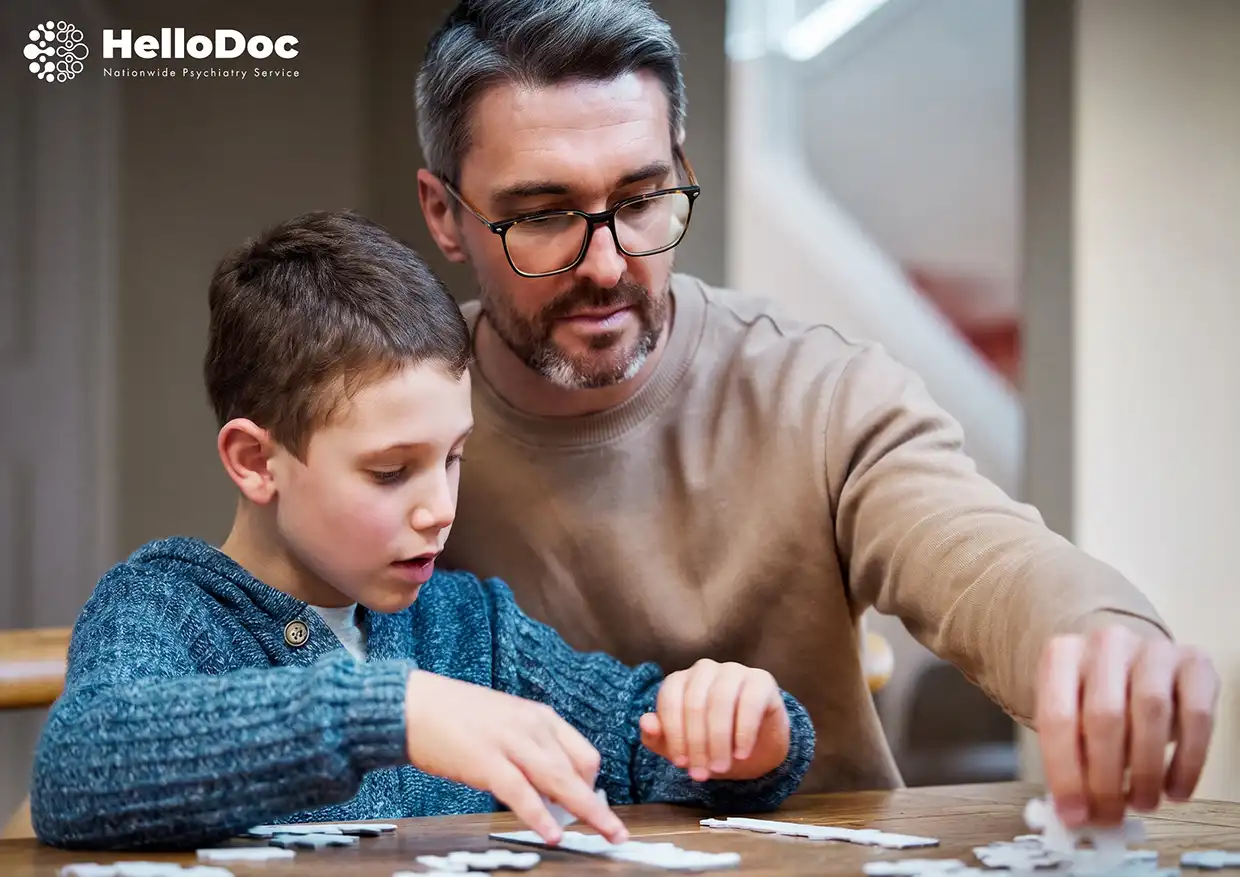
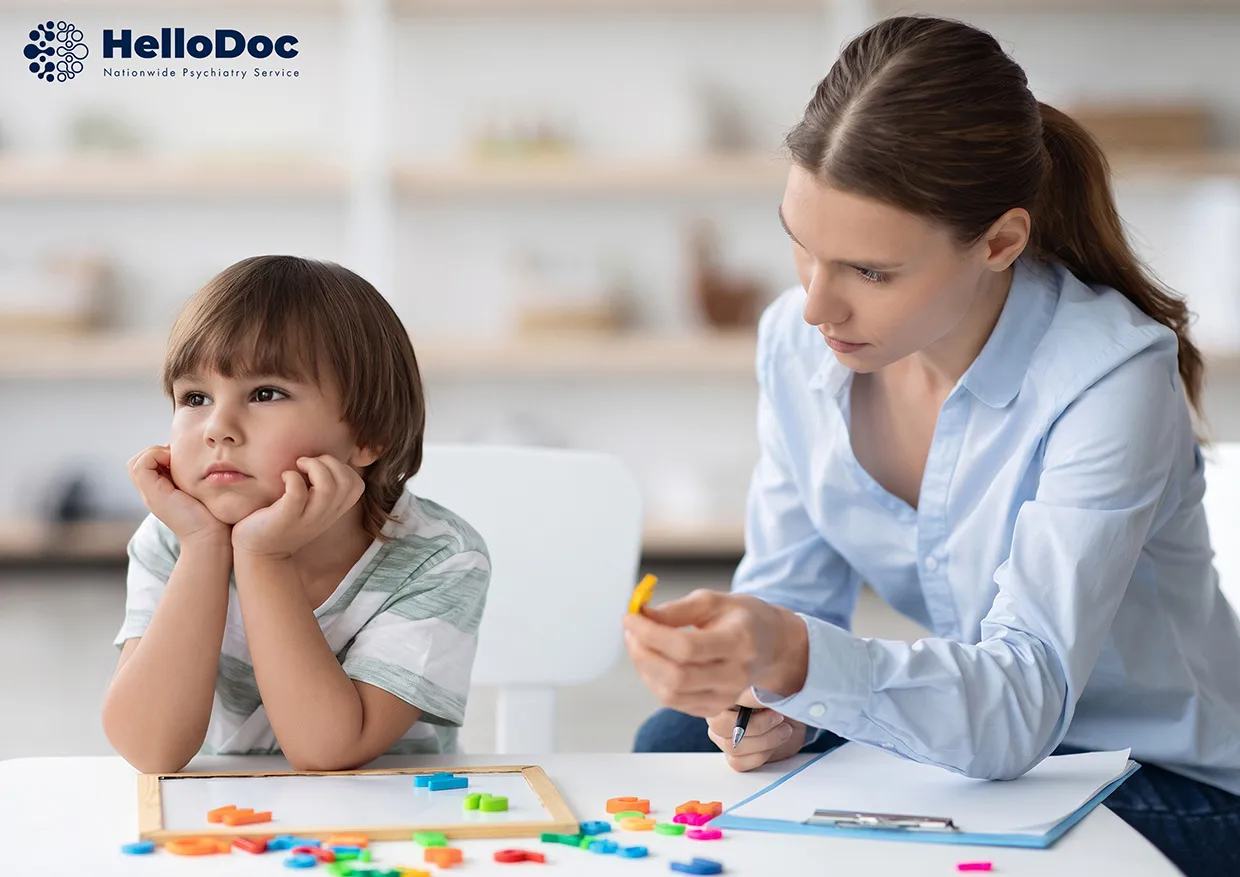
Talking openly with your child about ADHD can help them understand their experiences, recognise their strengths and access the support they need. A calm, age-appropriate conversation may also help reduce feelings of confusion or self-blame. Choose a relaxed moment, use simple words that suit their age, reassure them that ADHD is not their fault, and discuss both their strengths and challenges.
This guide explains how to talk to your child about their ADHD diagnosis, with practical conversation scripts for children under 8, children aged 8 to 12, and teenagers. It also covers how to discuss ADHD medication, explain the diagnosis to siblings, communicate with teachers, and respond to your child’s questions. You’ll also find practical language examples, guidance on common emotional reactions, recommended books about ADHD for children, and a free PDF of conversation scripts to help you prepare.
Key takeaways
- Tell your child. Kids usually sense that something is going on, and silence can feel like shame.
- Start soon, keep it simple, and add detail as they grow.
- Say “it’s not your fault” and talk about strengths and challenges together.
- Use “you have ADHD”, not “you are ADHD”.
- Expect more than one conversation, and let your child’s questions lead.
Should I Tell My Child About Their ADHD?
In general, it is helpful to talk openly with your child about their ADHD diagnosis in a way that suits their age, understanding and emotional needs. If you are unsure how to approach the conversation, seek guidance from the healthcare professional involved in their care.

The Child and Adolescent Health Service (CAHS) in Western Australia highlights that these conversations can help children understand their strengths and build confidence. CHADD also explains that hiding an ADHD diagnosis may unintentionally reinforce the idea that it is something to be ashamed of.
Children may notice differences in how they behave, learn or interact with others at school and home. Without an explanation, some may develop misunderstandings about their difficulties or blame themselves. They may also learn about their diagnosis from someone else, which can make the experience more confusing or upsetting.
Talking openly about ADHD can help your child become involved in their own care. They can gradually learn to recognise what they find challenging, identify strategies that help, ask for support and understand that they are not alone.
When Should I Tell My Child About Their ADHD?
Tell your child fairly soon after the diagnosis, once you have had time to absorb it and learn the basics. There is no perfect age. CHADD says it is never too early to start, and that you can keep adding detail as your child grows. Follow their cues and questions.
If your child is very young, begin with a short, simple version. If they are older, they may already have worked out that something is different, and they may be relieved to have a name for it. Either way, you will talk about it many times, not just once.
How Do I Choose a Calm Time to Talk?
Choose a quiet, relaxed moment when neither of you is rushed, tired, or upset. Avoid times straight after a meltdown, at bedtime or in front of others. Many children talk more easily side by side, such as in the car, on a walk or while drawing, than face to face.
A few practical ideas:
- Think through what you want to say, and keep it short.
- Choose a time when you can talk one-on-one, without interruptions.
- Keep the mood light and warm, not like a serious announcement.
- Offer a snack, a favourite spot, or something to do with their hands.
- Be ready to stop if they have had enough. You can return to it.
How Do I Explain ADHD to a Child?
To explain ADHD to a child, use simple words, start with something they have noticed themselves, and describe ADHD as a difference in how the brain handles attention, energy, and stopping to think. CAHS suggests using the words your child already uses to describe how their brain works, and keeping it positive.
Here are the building blocks for explaining ADHD to a child.
“It’s Not Your Fault”
The most important message is that ADHD is not your child’s fault, not a punishment, and not caused by being naughty or lazy. Say it clearly and say it more than once. Children with ADHD often hear a lot of correction, so they need to hear this.
You can say: “ADHD is not something you did wrong. It’s how your brain is built. It has nothing to do with being a good kid or a bad kid.”
What Language Should I Use About ADHD?
Use plain, kind words that describe ADHD as something your child has, not something they are. CHADD advises against saying “You are ADHD”, because your child is not a diagnosis. Avoid calling it a “disorder” or something “wrong” in front of your child. This table gives examples of ADHD language for kids.
Say this | Not this | Why |
“You have ADHD.” | “You are ADHD.” | Your child is not their diagnosis |
“Your brain works differently.” | “Something is wrong with your brain.” | It avoids shame and is accurate |
“ADHD makes some things harder and some things easier.” | “ADHD is a problem you need to fix.” | It gives a balanced picture |
“It’s not your fault.” | “Why can’t you just try harder?” | Trying harder is not the issue |
“Let’s work out what helps.” | “You’ll grow out of it.” | ADHD often continues, so avoid promises either way |
“Everyone has things they’re good at and things that are tricky.” | “You’re so lucky to have ADHD.” | It respects real struggles |
Which Analogies Help Kids Understand ADHD?
Analogies turn an abstract idea into a picture a child can hold on to. Three work well for many families, and clinicians often use them. Choose the one that fits your child’s interests, and let them change it.
- The race car with tricky brakes. “Your brain is like a race car with a powerful engine, but the brakes are harder to use. We are going to practise using the brakes.”
- Glasses for the brain. “Glasses help eyes see clearly. Some tools and tricks are like glasses for your brain, to help you focus.”
- A video game. “Your brain loves fast, exciting levels and finds slow, boring levels hard to stay in. We can add tricks to make the slow levels easier.”
Talking About Strengths and Challenges Together
Say both the strengths and the challenges. CHADD says everyone has things they do well and things they find harder, and this applies to ADHD too. Name strengths specific to your child, such as creativity, energy, humour, kindness, curiosity or bravery, and write them down together.
Is ADHD a superpower? Not quite. Calling it a superpower can leave children feeling that their struggles do not count. A more honest message is that ADHD brings real challenges and real strengths, and that you will work on both. Similarly, neurodiversity explained to kids can be simple: “People’s brains work in different ways, just like people look different. Your brain is one kind of brain, and the world needs all kinds.”
What Should I Say? Scripts for Every Age
These scripts are starting points. Change the words so they sound like you, and use your child’s own examples. Each one is short on purpose, because you can add more over time.
Under 8: Keep It Concrete
For children under 8, keep it short and concrete, use a picture or animal, and talk mainly about behaviours they know, such as finding it hard to sit still or wait. CHADD suggests that for under-tens, you focus more on behaviours. A picture book can help.
Script (under 8) “You know how your brain is like a super-fast race car? It has a great engine, but the brakes are a bit tricky, so sometimes it’s hard to stop and listen. That’s called ADHD. It’s not your fault and you’re not in trouble, and we’re going to learn about your brakes together.”
Ages 8 to 12: Add the “Why”
For children aged 8 to 12, add more about how the brain works, link it to things they have noticed, and invite questions. They can understand more about their brain than younger children. Mention that ADHD is not about intelligence, and that you will find helpful tools together.
Script (8 to 12) “The doctor worked out why paying attention and sitting still can feel so hard for you. You have ADHD, which means your brain works a bit differently with focus, planning, and stopping to think. It has nothing to do with being lazy or not smart. It also comes with strengths, like your ideas and your energy, and we’ll find tricks that help.”
Teens: Respect Their Voice
Teens need honesty, respect, and a say in what happens next. Ask what they already think, explain that ADHD is not a flaw or a punishment, and compare it to something like needing glasses or having asthma. CHADD suggests a frank conversation about who they tell, since your teen may have different views from yours.
Script (teens): “I want to talk about what the assessment found, and I’d like to hear what you think. You have ADHD, which is a difference in how your brain handles attention, motivation, and planning. It’s not a flaw or a punishment, and it’s more like needing glasses than being broken. You get a say in what happens next, and who you tell is your decision.”
A teen ADHD diagnosis conversation may not go smoothly. Some teens feel embarrassed, want to deny it, or wish it away. Stay calm, listen, and come back to it. Let them talk to their doctor or psychologist on their own too.
How Might My Child React, and What Should I Say?
Children react in many ways, from relief to worry to anger. All of these are normal. Listen first, name the feeling, and answer honestly. Your child’s reaction may also change over time, or show up days later. This table shows common ones.
How your child might react | What you might see | What you can say |
Relief | “I knew something was different.” | “You were right to notice. Now we can find what helps.” |
Worry | “Is something wrong with me? Will I get in trouble?” | “Nothing is wrong with you. You’re not in trouble. We’ll work it out together.” |
Sadness or “I’m broken” | Tears, going quiet | “I can see this feels big. Your brain isn’t broken; it works differently, and I love you just as you are.” |
Anger or denial | “I don’t have it!” | “It’s okay to feel upset. You don’t have to like it. We can talk about it any time.” |
Little interest | A shrug, changing the subject | “That’s fine. We can talk again whenever you want.” |
Worry about friends | “Do I have to tell anyone?” | “You decide who you tell. We can work out what to say if you want to.” |
ADHD and Self-Esteem: What Helps After the Talk
ADHD self-esteem in children can take a hit, because they often hear more correction than praise. After the conversation, look for chances to notice what they do well, put their strengths list somewhere visible, and praise effort, not only results. ADHD explains difficulties but is not an excuse to give up.
If your child seems persistently sad, anxious or withdrawn, or says they are “dumb” or “bad”, talk to your GP or a psychologist.
How Do I Talk to My Child About ADHD Medication?
Talk about ADHD medication honestly and calmly, as one possible tool, and involve your child in doctor visits. Do not hide it or disguise it. Avoid promising what it will do, and take questions about it to the doctor. Whether medication is right for your child is a decision for you and your doctor.
CAHS recommends talking to your child about how any medicine might help them and how it might make them feel, and including them in discussions with the doctor. If your child is worried, listen to their fears and bring them to the appointment.
Script (medication) “The doctor is going to talk with us about whether medicine could be one tool to help. We’ll go together, and you can ask the doctor anything you like. Nothing happens without us talking about it first.”
How Do I Talk to Siblings About ADHD?
Tell brothers and sisters in simple, age-appropriate words that ADHD is not catching, not anyone’s fault and does not mean your child is loved more or less. Explain that fair does not always mean the same, and make time for one-on-one attention with each child.
Siblings may feel jealous, embarrassed, or protective, or may get less attention. Let them voice these feelings without judgement. A book written for siblings can help.
Script (siblings): “Your sister has ADHD, so her brain finds some things, like waiting and focusing, harder. It’s not her fault, and you can’t catch it. Fair doesn’t always mean the same, but you matter just as much, and you can tell me whenever something feels unfair.”
Should I Tell My Child's Teachers and Others?
Yes, most families find it helps to tell their child’s school. Teachers can then adjust expectations and use strategies that help. Ask for a meeting, explain how ADHD affects your child, and agree on what your child is comfortable having shared with classmates and friends.
Involve your child in decisions about who knows, especially as they get older. Some children like to explain it themselves, while others prefer to keep it private. If your child wants to tell a friend, help them practise a short explanation in their own words.
Script (to a teacher): “Sam has been diagnosed with ADHD. He works best when instructions are short, and he gets movement breaks. Could we meet to plan what helps, and agree on what Sam is comfortable sharing with classmates?”
What If I Have ADHD Too?
If you have ADHD yourself, sharing your own experience can be one of the most powerful things you do. It shows your child that ADHD is common, that you also find some things hard, and that you can use tools to manage. CHADD suggests being open and showing the strategies you use.
You can say that you forget things unless you write them down, then show your child your shopping list. Invite their questions, and let them see that you ask for help when you need it. ADHD often runs in families, so if you recognise yourself in your child, it is worth talking to your GP.
Script (parent with ADHD): “I have ADHD too, so I sometimes forget things unless I write them down. That’s why I use lists, and I’m still learning tricks that help. We can work out yours together.”
What Are the Best Books About ADHD for Kids?
Books give children words and characters to relate to, and let them ask questions in their own time. The best choice depends on your child’s age and reading level. This table lists commonly recommended titles. Ages are a guide, so read the book first, and check availability with your library or bookshop.
|
Age |
Title and author |
Notes |
|
Under 8 |
Shelley the Hyperactive Turtle, Deborah M. Moss |
A turtle story for ages 4 to 8 that touches on a doctor’s visit and being different |
|
Under 8 |
Eddie Enough!, Debbie Zimmett |
A story about school and friendships, for ages 6 to 9 |
|
Under 8 |
My Brain Needs Glasses, Annick Vincent |
Uses the glasses analogy to explain ADHD to children |
|
Under 8 |
My Brain Is a Race Car, Nell Harris |
A children’s guide to a neurodivergent brain |
|
All ages |
Kids Like Me (free ebook), Australian ADHD Professionals Association |
Illustrated by young Australians with ADHD aged 5 to 18 |
|
8 to 12 |
Putting on the Brakes, Patricia Quinn and Judith Stern |
A practical guide for young people to understand and manage ADHD |
|
8 to 12 |
Learning to Slow Down and Pay Attention, Kathleen Nadeau and Ellen Dixon |
A book for kids about ADHD |
|
8 to 12 |
The Survival Guide for Kids with ADHD, John F. Taylor |
Practical strategies in a chapter book |
|
8 to 12 |
Cory Stories, Jeanne Kraus |
Realistic stories about living with ADHD |
|
Teens |
The ADHD Teen Survival Guide, Soli Lazarus and Kara McHale |
A guide for teens |
|
Teens |
Winning with ADHD, Grace Friedman and Sarah Cheyette |
A playbook for teens and young adults |
|
Teens |
ADHD Is Awesome, Penn and Kim Holderness |
A positive guide to thriving with ADHD |
|
Siblings |
My Brother’s a World Class Pain, Michael Gordon |
A sibling’s guide to ADHD |
When Should I Get More Help?
Reach out if your child is very upset, withdrawn, refusing school, or struggling to cope after the diagnosis, or if you feel overwhelmed. Your GP, paediatrician, psychologist or the clinician who diagnosed your child can help. Kids Helpline (1800 55 1800) offers free counselling for children and young people.
You can also read more on the Raising Children Network and the Australian ADHD Professionals Association (AADPA), which has an information sheet on how to talk to your child about their ADHD and a free ebook for children.
Frequently Asked Questions
Should I tell my child about their ADHD?
Yes. Telling your child helps them understand their brain, protects their self-esteem and prevents them filling the gap with worse ideas. Keep it calm, simple and positive, say it is not their fault, and talk about strengths as well as challenges. You will have many conversations over time.
How do I explain ADHD to a young child?
Use simple, concrete words and a picture they can hold on to, such as a race car with tricky brakes. Talk about behaviours they know, say it is not their fault, and keep it short. A picture book can help, and you can add detail as they grow.
What are the best books about ADHD for kids?
Popular choices include Shelley the Hyperactive Turtle and My Brain Needs Glasses for younger children, Putting on the Brakes and The Survival Guide for Kids with ADHD for ages 8 to 12, and The ADHD Teen Survival Guide for teens. The AADPA’s free Kids Like Me ebook suits many ages.
How do I talk to siblings about ADHD?
Explain in simple words that ADHD is not catching, not anyone’s fault and not a reason to love a child more or less. Say that fair does not always mean the same, give each child one-on-one time, and let siblings share their feelings honestly.
How do I talk to my teenager about their ADHD diagnosis?
Be honest and respectful. Ask what they already think, explain that ADHD is not a flaw or a punishment, and compare it to needing glasses or having asthma. Give them a say in treatment and in who knows, and let them speak with their doctor on their own.
HelloDoc (Disclaimer and Liability Terms)
HelloDoc aims to connect users with psychiatry professionals. However, we do not guarantee the accuracy, reliability, or completeness of the information shared. The platform does not warrant any professional medical advice, diagnosis, or treatment. All services are offered “as-is,” and users must assess their relevance independently.
HelloDoc is NOT an emergency response platform. All consultations are by appointment only. If you are experiencing a mental health crisis, please seek immediate assistance from emergency services.
For Mental Health Emergencies in Australia, contact:
- Lifeline: 13 11 14
- Beyond Blue: 1300 224 636
- MensLine Australia: 1300 789 978
- Suicide Call Back Service: 1300 659 467
- Veterans and Veterans Families Counselling Service: 1800 011 046
The information on this website, including blog posts, is for general informational purposes only and is not meant to replace or substitute for professional medical advice, diagnosis, or evidence-based treatment. Always consult a qualified healthcare provider for any medical condition or health-related questions. By continuing to use HelloDoc, you accept these terms and acknowledge that they may change without notice.