
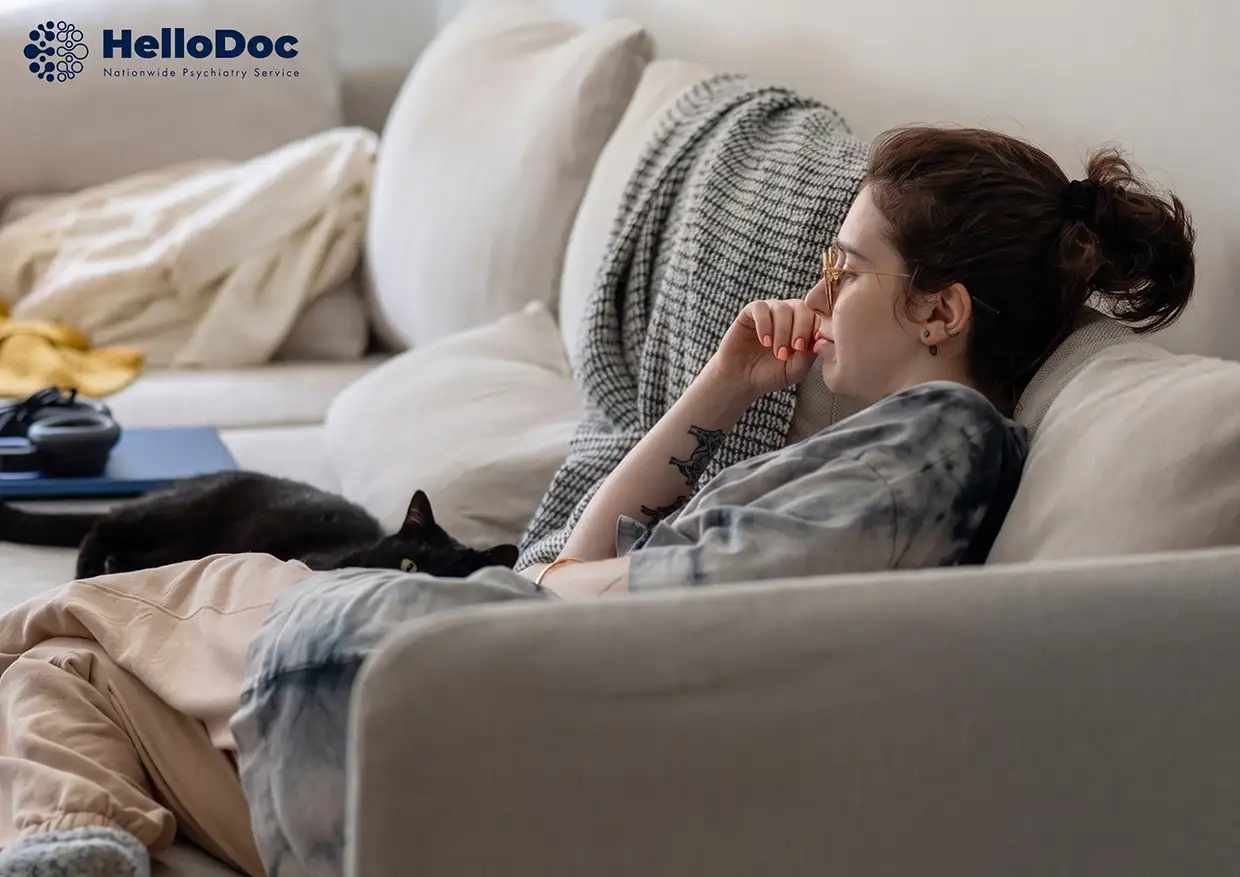
Attention-deficit/hyperactivity disorder is well recognised, but ADHD in women is one of the most commonly missed and misunderstood presentations in clinical practice. Many women are diagnosed in adulthood, having grown up without a diagnosis and years of difficulties with focus, organisation, memory, and emotional regulation without explanation.
ADHD in adult women, however, is often less obviously hyperactive and more subtle and internalised than the stereotype. These differences in presentation lead to delayed diagnosis, misinterpretation of symptoms, and long-term emotional strain.
In this article, we discuss how ADHD presents in females across the lifespan, what the symptoms tend to look like, and why awareness is important for early identification and support.

ADHD in Females: What Is It?
ADHD is a neurodevelopmental disorder that affects executive functioning, attention regulation, impulse control, and emotional regulation. However, ADHD symptoms in females are usually quite different from those in males.
In many women, the problem is not behavioural, but an internal overload of cognition. That includes all the time racing thoughts, difficulty prioritising tasks and mental fatigue. These challenges are not always apparent to others and so are often overlooked.
Many girls with ADHD develop compensatory strategies from childhood. These behaviours allow them to meet expectations in structured environments, but also mask underlying difficulties, making early identification more difficult.
Why ADHD is Often Missed in Women
The way ADHD biologically presents in women and societal expectations mean that it is under-recognised. Girls are more likely to present with inattentive than hyperactive behaviours, making referral for assessment less likely.
They may be quiet, unfocused, or erratic in the classroom, but not disruptive. Therefore, their problems are often seen as being personality-related, such as shyness, sensitivity, or lack of motivation.
Another factor is masking behaviour. Many women develop systems to compensate for disorganisation and forgetfulness without even realising it. These strategies can fake it, but they take massive amounts of mental energy and tend to burn out over time.
Key Characteristics of Women with ADHD
Women with ADHD-like symptoms often struggle with regulating attention and executive function. They may include:
- Difficulty concentrating in conversations or while doing tasks
- Mentally tired often, but getting enough sleep
- Not remembering what he had to do each day, and his appointments
- Problems with planning and prioritising activities
- Extreme mood swings and emotional states
- Juggling multiple demands
Often, these symptoms are misdiagnosed as anxiety-related behaviour or general stress. But the fact that they are in different environments points to a neurological problem, not a situational one.
Symptoms of ADHD in Women
The most obvious signs of ADHD in women are not just from episode to episode but in their day-to-day functioning. Lots of people struggle to find structure in their personal and professional lives.
Common challenges include inconsistent productivity, problems finishing long-term projects, and needing outside pressure to hit deadlines. Time perception may also be affected by the underestimation of the duration of tasks.
A second shared experience is social and emotional exhaustion. Demanding interactions that require continual attention or emotional regulation can be draining and lead to withdrawal or avoidance behaviours.
Adult ADHD: Impact and Functional Impairment
For adult women with ADHD, the symptoms often become more apparent as they take on more responsibility and less external structure. Work situations, home life, and family duties require sustained organisation and planning, and these can expose underlying problems with executive functioning.
Many women report a nagging feeling of a lack of balance between effort and output. You are very busy, but there is some unfinished business or chaos. This constant battle can cause low self-esteem and chronic stress.
If the patterns are not recognised, they may also lead to secondary mental health problems (e.g., anxiety and depressive symptoms).
Women with High-Functioning Attention-Deficit Hyperactivity Disorder
Some people have this thing called high-functioning ADHD. In such circumstances, the external performance seems normal, even successful, but the internal effort is much greater.
Symptoms of high-functioning ADHD in women include perfectionism, over-preparing and depending too heavily on the last-minute urgency to get things done. The behaviours are often driven by a desire to make up for problems with focus and organisation.
Achievements can be sustained but are often coupled with emotional exhaustion, cycles of burnout and difficulty in disengagement from responsibilities (Hobfoll et al., 2000).
Adolescent Girls and ADHD
ADHD symptoms in teen girls are subtle in adolescence and can be easily mistaken for normal developmental changes. Academics are all over the place, and just because a student knows the material doesn’t mean they will always do well.
Signs of attention problems include daydreaming, forgetfulness, or problems with multi-step directions. Also, friendships and social situations are usually emotionally intense.
At this stage in life, these behaviours are not usually disruptive, which is why many teenage girls go undiagnosed.
Effect of Hormones and Changes in Lifespan
ADHD in women can look different at different stages of life. The disease itself does not get worse, but the symptoms are influenced by external demands and biological changes.
Hormonal changes during menstruation, pregnancy, and menopause can affect attention, energy, and emotional regulation. These changes can add to problems that are already there. Sometimes the signs and symptoms are worse at certain times of the year.
With adult responsibilities looming, many women struggle with organisation, time management, and mental clarity.
How Women Show Distraction
Many women with ADHD are more likely to have inattentive than hyperactive characteristics. In this presentation, the outward behaviour may seem calm, but the internal cognitive processing is heavily disrupted.
People commonly notice that they have a difficult time sustaining their attention, they often “zone out” when doing something, and they have a hard time getting activities started. There may still be some forgetfulness and some difficulty with structured instructions.
These symptoms are often ignored or dismissed because they do not cause any outward disruption.
Psychological and Emotional Effects
Living undiagnosed with ADHD can be an emotional accumulation. A slow burn. Repeated struggles with organisation, consistency, and focus can lead many women to develop long-term self-doubt.
This can lead to feelings of inadequacy, frustration, and chronic stress over time. The ability to control emotions may also be impaired, making one more sensitive in stressful situations.
These experiences are often compounded by years of misunderstanding, where difficulties are seen as personal failings rather than neurodevelopmental differences.
Diagnosis and Clinical Recognition are Important
Early diagnosis of ADHD in women is important to improve long-term prognosis. A formal diagnosis leads to clarity, validation, and access to the right treatment pathways.
Assessment helps people to better understand their own cognitive patterns and to develop strategies that are right for them. It can also help distinguish ADHD from other similar conditions, such as anxiety or depression.
Treatment may include behavioural therapy, structured coaching, lifestyle changes, and, where indicated, medication. Interventions of this kind aim to improve executive functioning and reduce impairment in daily functioning.
Conclusion
Women with ADHD have a complex and often invisible condition that can have a significant impact on day-to-day functioning, emotional well-being, and long-term mental health. Symptoms are often internalized and non-disruptive, so for many people, it can take years before they are diagnosed.
Greater awareness of female-specific presentation patterns is essential for earlier recognition and intervention. Understanding the impact of ADHD on attention, organisation, and emotional regulation can help individuals and clinicians to more accurately diagnose the condition and to provide effective support.
With proper diagnosis and treatment, women with ADHD can find ways to achieve greater stability, self-esteem, and quality of life.
FAQ’s
1. How to Recognize Early ADHD Symptoms in Women?
Early signs of ADHD in women can include: trouble concentrating, being forgetful and often disorganised, emotional sensitivity, problem time management. The signs may be less obvious in childhood but more obvious in adolescence or adulthood.
2. What is the difference between ADHD in women and in men?
ADHD in girls is often more internalized, not hyperactive. Women may show signs of mental overload, inattentiveness, and emotional exhaustion rather than outward signs of restlessness, which can make the condition harder to spot.
3. What does inattentive ADHD look like in females?
Women with inattentive ADHD may be zoning out, missing parts of conversations, having trouble completing tasks, and being easily sidetracked. These problems can occur even when the person is smart and very capable.
4. Are girls with ADHD misdiagnosed as having anxiety or stress?
“Yes. Many of the symptoms of ADHD in women mimic anxiety, stress, and burnout. That is one of the main reasons for the delayed or missed diagnosis.
5. Is adult ADHD in females often diagnosed late?
Yes, often adult women with ADHD are diagnosed later in life. The diagnosis often comes in adulthood, after years of struggling to organise, focus, and regulate emotions.
6. Do ADHD symptoms in women change over time?
Right. Symptoms may be more pronounced with increased responsibility or hormonal changes. Attention and emotional control change for many women in adulthood, they report.
7. What is high-functioning ADHD in females?
High-functioning ADHD is the term used for people who appear to be thriving, but are struggling with issues related to focus, planning, and feeling emotionally drained. They often use perfectionism and overcompensation to cope with daily tasks.
8. Does ADHD get worse in women with age?
The condition may not worsen, but the requirements of life often increase with age. This can make existing problems with concentration, memory, and organisation worse.
9. Are the symptoms of ADHD different in teenage girls?
Yes, teenagers are more likely to have symptoms such as poor concentration, academic inconsistency, emotional sensitivity, and difficulty staying organised rather than disruptive behaviour.
10. Why are so many women with ADHD undiagnosed?
ADHD in women is often missed because the symptoms are less obvious and often mistaken for personality traits, anxiety, or stress. Many women also develop strong coping mechanisms to hide their struggles.
HelloDoc (Disclaimer and Liability Terms)
HelloDoc aims to connect users with psychiatry professionals. However, we do not guarantee the accuracy, reliability, or completeness of the information shared. The platform does not warrant any professional medical advice, diagnosis, or treatment. All services are offered “as-is,” and users must assess their relevance independently.
HelloDoc is NOT an emergency response platform. All consultations are by appointment only. If you are experiencing a mental health crisis, please seek immediate assistance from emergency services.
For Mental Health Emergencies in Australia, contact:
- Lifeline: 13 11 14
- Beyond Blue: 1300 224 636
- MensLine Australia: 1300 789 978
- Suicide Call Back Service: 1300 659 467
- Veterans and Veterans Families Counselling Service: 1800 011 046
The information on this website, including blog posts, is for general informational purposes only and is not meant to replace or substitute for professional medical advice, diagnosis, or evidence-based treatment. Always consult a qualified healthcare provider for any medical condition or health-related questions. By continuing to use HelloDoc, you accept these terms and acknowledge that they may change without notice.